The Films page is made possible with the generous support of the Charatan and Holm Families.
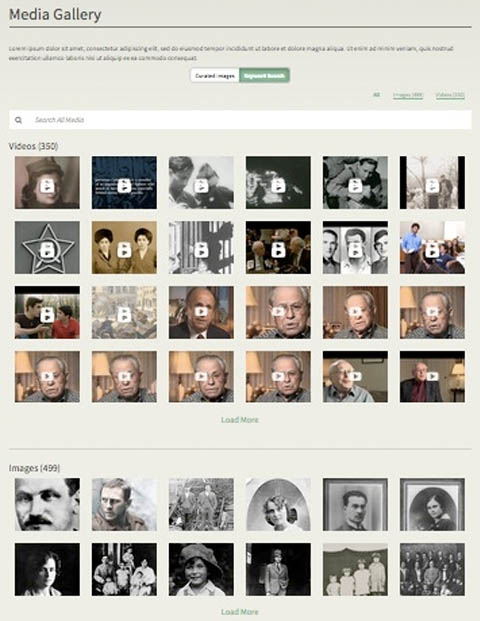
Watch short documentary films narrated by Ed Asner, Tova Feldshuh, Larry King, and Liev Schreiber made from from a collection of 50 original interviews with surviving Jewish partisans shot all over the world.
Witness the Jewish partisans' stories of endurance, victory, and struggle against the Nazis and their collaborators during World War II. Each 3-24 minute film tells a true tale of survival and courage from actual partisans. Films are also available on DVD: please email dvd@jewishpartisans.org for more information.
Film
Introduction to the Jewish Partisans
During the Holocaust, an estimated 20,000–30,000 Jews joined organized armed resistance groups throughout Nazi-occupied Europe, fighting back as Jewish partisans. Through firsthand testimonies, this film reveals how Jewish partisans carried out acts of sabotage, ambushed German forces, rescued Jews from ghettos, and fought for their survival and freedom. Living in forests and other remote areas, they endured hunger, harsh weather, and constant danger while continuing their resistance. Ed Asner narrates. For a version of this film with Spanish subtitles, click here. Total running time: 6:37
Film
Everyday the Impossible: Jewish Women in the Partisans
Women made up less than 10% of the partisans. This film tells the stories of Jewish women who became partisans, taking on roles ranging from nursing and reconnaissance to weapons transport, sabotage, and armed combat. Through their firsthand testimonies, they describe the dangers, challenges, and extraordinary courage required to survive and fight back. Their experiences reveal the determination of women who resisted Nazi oppression while helping others survive. For these women, survival itself was an act of resistance—and a way to destroy the Nazi machine. Narrated by Tovah Feldshuh. For a version of this film with Spanish subtitles, click here. Total running time: 15:00
Film
Living and Surviving in the Partisans: Food
Finding enough food was a constant struggle for Jewish partisans living behind enemy lines. They relied on sympathetic local farmers, scavenged, traded, stole, or took food when necessary to survive. Hunger could be extreme, with some partisans surviving on tiny portions or going for days without food. Food left behind by the Germans could also be booby-trapped, making every potential meal a risk. Despite these hardships, partisans sometimes used food as a weapon by preventing supplies from reaching German forces. Narrated by Larry King. For a version of this film with Spanish subtitles, click here. Total running time: 3:52
Film
Living and Surviving in the Partisans: Medicine
Jewish partisans faced severe medical challenges while living and fighting in the forests. With few doctors, limited medicine, and little ability to sterilize wounds, even minor injuries could become life-threatening. Partisans treated one another with whatever was available, while diseases such as typhus spread through the camps. Medicine was sometimes captured from the Germans or delivered by Allied and Soviet forces. Through firsthand testimony, this film reveals the resourcefulness and determination required to survive without adequate medical care. For a version of this film with Spanish subtitles, click here. Total running time: 4:43
Film
Living and Surviving in the Partisans: Shelter
Jewish partisans relied on the forests for protection while constantly moving to avoid German forces and their collaborators. They built underground bunkers and improvised shelters, often using whatever materials they could find. Winter brought extreme cold, snow, rain, and inadequate clothing, making survival especially difficult. Yet darkness, storms, and heavy snow could also protect the partisans by concealing their movements. Their experiences demonstrate how the forest became both a place of danger and a refuge. Larry King narrates. For a version of this film with Spanish subtitles, click here. Total running time: 4:40.
Film
Living and Surviving in the Partisans: Winter and Night
Winter brought Jewish partisans some of the most dangerous and difficult conditions of their lives. With inadequate clothing, little shelter, and temperatures far below freezing, they struggled to stay warm and survive. They endured freezing rain, snow, hunger, and exhaustion while living and sleeping in the forest. Yet the harsh winter weather also provided protection by making it easier to detect enemy movements and conceal their own. Through firsthand testimonies, the film reveals how Jewish partisans turned even the most brutal conditions into tools for survival and resistance. Larry King narrates. For a version of this film with Spanish subtitles, click here. Total running time: 4:16
Film
Partisans: Through the Eye of the Soviet Newsreel
Rare Soviet newsreel footage offers a powerful glimpse of Jewish partisans fighting behind German lines during World War II. The film documents Polish and Soviet partisan fighters, including thousands of Jews who escaped Nazi persecution to join the resistance. Despite harsh winters, hunger, and the lack of permanent shelter, partisans built bunkers, salvaged weapons, and organized their own support networks. They disrupted the German war effort by destroying railroads, bridges, communication lines, and other strategic targets. This historic footage provides visual testimony to the contributions of Jewish partisans and their role in the wartime resistance. Ed Asner narrates. Total running time: 3:30
Film
Fighting on Three Fronts: Antisemitism and the Jewish Partisans
Jewish partisans fought the Nazis while also confronting antisemitism within some partisan groups and local communities. As a minority among resistance fighters, Jews sometimes faced discrimination, hostility, unequal treatment, and even violence from those fighting alongside them. Some Jewish partisans were forced to hide their identities or provide their own weapons and ammunition to join resistance groups. In response, Jews formed their own partisan units to protect one another and save Jewish lives, including the Bielski group and the Avengers. This film reveals the additional challenges Jewish partisans faced and their determination to resist both Nazi persecution and antisemitism. Narrated by Larry King. Total running time: 13:41
Film
A Partisan Returns: The Legacy of Two Sisters
After escaping the Novogrudok work camp through a 750-foot tunnel, Lisa Reibel and nearly 250 other Jews fled into the forest and joined the Bielski partisans. More than 60 years later, Lisa returns to her birthplace in Belarus with family members to confront her past and honor those who did not survive. She visits the sites of her childhood, the mass graves of her family and community, and the former work camp from which she escaped. Her journey reveals the extraordinary courage of those who escaped the ghettos and found refuge with the Bielski Brigade. The film explores survival, memory, family legacy, and the generations made possible by the courage of those who fought to live. Total running time: 21:47
Film
The Reunion
More than 55 former Jewish partisans come together in New York City decades after the Holocaust to reconnect and share memories. For some, it is the first time they have seen one another in more than 60 years, bringing back memories of their time fighting in the forests. The reunion reveals the enduring bonds formed through shared experiences of resistance, survival, and loss. Through their stories and songs, the partisans reflect on their struggle and the responsibility to preserve their history for future generations. Their message is one of remembrance, courage, and the importance of standing up for what is right. Narrated by Liev Schreiber. Total running time: 24:40
Film
The Bielski Brothers: An Introduction
Tuvia, Asael, Zus, and Aron Bielski transformed their family’s struggle for survival into an organized Jewish partisan community in the forests of Belarus. After the Germans murdered members of their family and thousands of Jews in the region, the brothers helped relatives escape and created a refuge in the woods. Tuvia insisted that the group welcome women, children, and elderly Jews, declaring that saving Jewish lives was central to their mission. The Bielski group grew into both a community and a fighting force, carrying out attacks against the Germans and their collaborators while protecting those who could not fight. The story of the Bielski brothers reveals the complex leadership, courage, and determination behind one of the largest Jewish partisan groups of the Holocaust.To view a version of this film with Russian subtitles, click here. Total running time: 6:45
Film
What is the Jewish Partisan Educational Foundation?
This film shows the innovative programs of the Jewish Partisan Educational Foundation. JPEF teaches about armed Jewish resistance during -- the Jewish Partisans -- during the Holocaust to thousands of schools all over the world. Narrated by Liev Schreiber. Total running time: 3:11
Film
Survival in the Forest: Isidore Karten and the Partisans
This film follows a family's journey to Poland and Ukraine to uncover the places where a Jewish partisan grandfather fought and helped save hundreds of Jews. Through visits to former Jewish communities, mass graves, and partisan sites, the family confronts both the devastation of the Holocaust and the legacy of those who survived. They search for the forests and bunkers where their family lived, fought, and found a measure of freedom. Meeting people whose families helped the partisans brings the past into personal focus and connects generations across time. The journey becomes an exploration of memory, family history, survival, and the responsibility to carry these stories forward. Total running time: 28:04
Film
Resistance Basics - Classroom Edition
This film introduces the history of Jewish armed resistance during the Holocaust and the formation of Jewish partisan groups. Approximately 20,000–30,000 Jewish partisans fought the Nazis and their collaborators across Nazi-occupied Europe. Through firsthand testimony, the film explores how partisans escaped ghettos and camps, survived in forests, and carried out sabotage and guerrilla attacks. It also examines the many forms of Jewish resistance, the challenges posed by antisemitism, and the difficult choices partisans faced. The film highlights the enduring lessons of the Jewish partisans: young people can make a difference, stand up to oppression, and never give up. Total running time: 30:24